
Off-Grid Solar Energy Storage System for Rural Households in Nairobi, Kenya | Highland Clean Energy Benefit Scheme
Preface
Rural areas around Nairobi in Kenya’s central highlands suffer from limited coverage of the public power grid. The grid infrastructure is fragile with extremely poor power supply reliability, featuring frequent blackouts and unstable voltage that severely disrupt daily routines and basic household appliance use for local rural residents. Traditional power supply in the region largely relies on diesel generators, which incur high fuel procurement costs and expensive ongoing maintenance. Meanwhile, diesel generators produce loud noise and exhaust emissions, bringing environmental pollution and potential safety hazards.
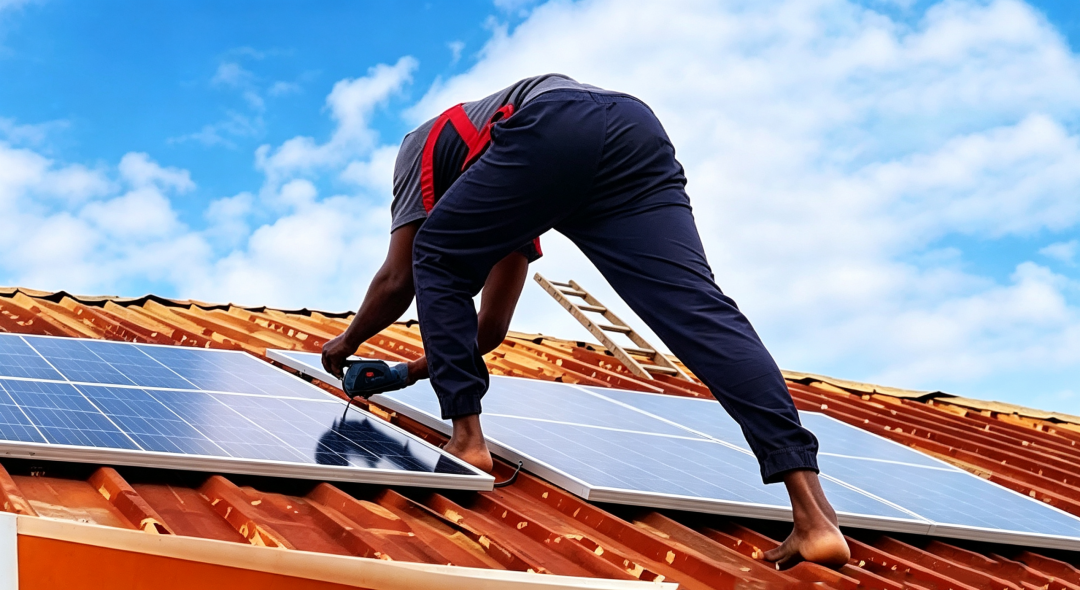
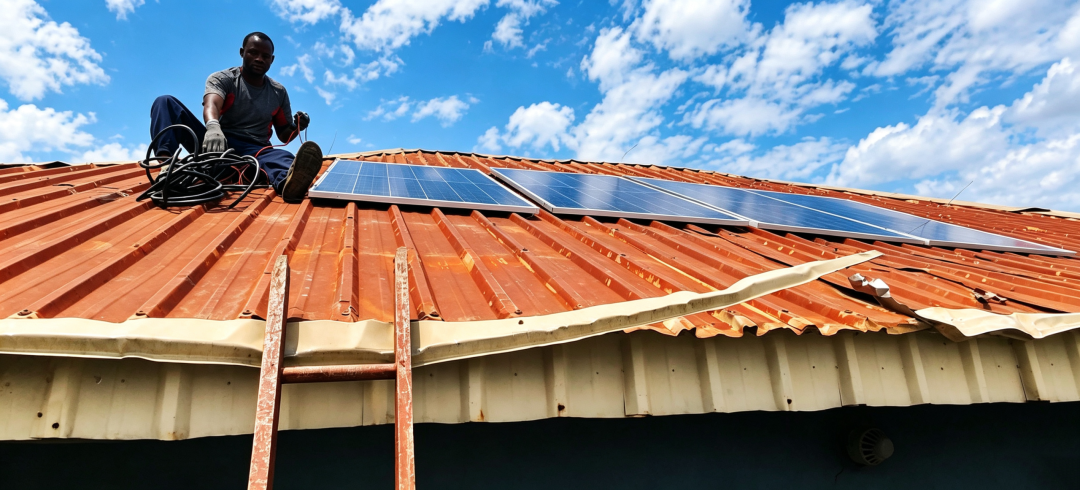
System PV Module Installation Drawing
To thoroughly resolve power shortages and electricity access difficulties for rural households, a small standalone off-grid solar energy storage power supply system is custom-designed for this project. Leveraging the natural advantage of abundant and stable solar irradiance in the Nairobi highlands, the system adopts a power generation mode combining photovoltaic power and energy storage batteries. It operates fully independently, disconnected from the public grid. All equipment is adapted to the local special environment featuring large diurnal temperature variations and heavy dust in the highlands. With modular structure and simple operation, the system can stably supply clean basic electricity for households, replacing traditional diesel power supply, cutting long-term electricity costs for residents, and effectively improving rural power access conditions. It boasts strong practicability for on-site implementation and great value for regional promotion.
1. Overview of Overall System Configuration
This solution is a customized standalone off-grid solar energy storage system for rural households on the Nairobi highlands of Kenya. The core configuration of the complete system includes 4 pieces of 650W photovoltaic modules, 1 set of 3kW hybrid inverter, and 1 unit of 2.5kWh energy storage lithium battery. No grid-tied equipment is equipped, realizing fully independent operation of self-power generation, self-energy storage and self-power supply. Designed based on site solar irradiance measurement and load matching, the system achieves a daily power generation capacity of 13 kWh, while the rated storage capacity of the energy storage battery is 2.5 kWh, precisely matching the basic electricity load of rural households.
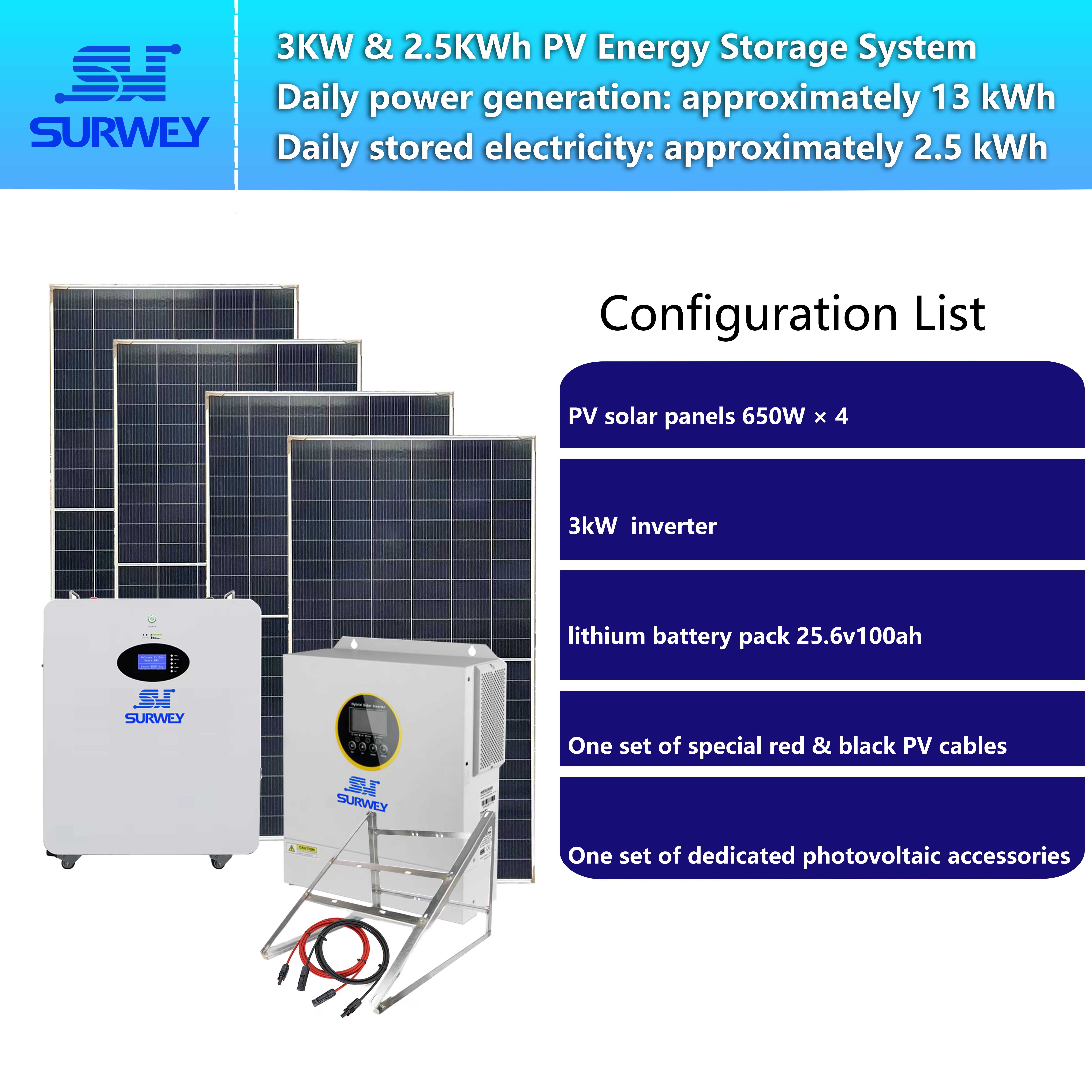
The whole system requires little manual intervention and can automatically complete full-cycle energy scheduling of power generation, power supply, energy storage and discharge, meeting the demand of simple operation for local households and providing all-day basic power guarantee for rural families.
System component selection fully takes local highland meteorological conditions into account, balancing power generation capacity, energy storage capacity and load demand. It maximizes the utilization of highland solar resources while controlling project investment cost to achieve self-sufficiency of clean electricity.
2. System Operating Principle
This system is a typical standalone off-grid solar-storage system with no connection to the public power grid. Its energy flow is divided into two main operating modes: photovoltaic power generation for self-consumption and energy storage in daytime, and battery inverter power supply at night.
Video: System Operating Principle
During daytime with sufficient sunlight, the photovoltaic array composed of 4 pieces of 650W modules captures solar radiation on the highland and converts light energy into direct current (DC). The DC power flows into the photovoltaic input port of the 3kW hybrid inverter. Integrated inside the inverter is an MPPT maximum power point tracker, which collects real-time voltage and current signals of the photovoltaic array and dynamically tracks the maximum output power point of the modules to fully exploit highland solar resources and improve light-to-electricity conversion efficiency.
After entering the hybrid inverter, DC power generated by solar panels is allocated into two branches: the first branch passes through the inverter unit directly to convert DC into pure sine-wave alternating current (AC) to supply real-time power for various household AC loads. The second branch of surplus DC power charges the 2.5kWh lithium battery through the built-in charge management module, storing excess electricity inside the battery. When the real-time household load consumption exceeds the instantaneous power output of the photovoltaic array, the system automatically draws power from the battery to fill the power gap and ensure uninterrupted operation of loads.
After sunset, solar irradiance drops rapidly and the output power of the photovoltaic array decreases sharply, failing to support load power consumption. The system automatically switches to battery power supply mode. The energy storage lithium battery outputs stable DC power to the hybrid inverter, which converts DC into standard sine-wave AC to continuously supply power for household appliances. Equipped with complete battery management logic, the system monitors battery voltage and current in real time. When the battery voltage falls to the preset discharge cut-off threshold, AC output will be automatically cut off to prevent deep over-discharge damage to battery cells and extend the overall service life of the battery.
Relying on integrated energy management logic, the whole system automatically controls the full process of power generation, electricity consumption, energy storage and discharge without complicated manual switching operations. It is simple and reliable, adapting to the usage habits of local rural users.
3. Main Equipment Parameters and Product Introduction
650W Photovoltaic Module (per piece)
This project adopts N-type monocrystalline 650W bifacial photovoltaic module with 132 solar cells and double-glass structure. Both front and rear sides use 2mm semi-tempered coated glass, and the junction box reaches IP68 protection class with excellent weather resistance.
- Open-circuit voltage: 49.86 V
- Operating voltage: 41.70 V
- Operating current: 15.72 A
- Bifaciality: up to 80%
In highland environments, the rear side can capture ground reflected light to effectively boost overall power generation. The module works stably within a wide temperature range of -40℃~85℃ and is resistant to sandstorms and hail impact, matching the climatic features of large diurnal temperature difference and heavy dust on Kenya’s highlands. Four modules form the photovoltaic array to provide DC input energy for the entire system.
The module features low power attenuation: power attenuation is no more than 1% in the first year and less than 0.4% annually afterwards, delivering stable long-term output. Suitable for long-term outdoor deployment in rural areas, it greatly reduces later equipment replacement costs. The double-glass structure resists rainwater erosion in highland rainy seasons and reduces cell damage caused by moisture penetration to guarantee stable power generation over time.
3kW Off-Grid Solar Hybrid Inverter

The 3kW off-grid solar hybrid inverter integrates MPPT photovoltaic controller and sine wave inverter module, serving as the core energy control unit of the whole system. It outputs pure sine-wave AC power compatible with various household AC loads.
- Maximum photovoltaic input power: 5000 W
The built-in MPPT tracker automatically tracks the maximum power point of the photovoltaic array to improve light energy utilization. The device is equipped with comprehensive electrical protection functions including overvoltage, undervoltage, overload, short circuit and overtemperature protection. Its operating temperature ranges from -10℃ to 50℃ with IP21 protection class, suitable for indoor installation in highland areas.
It supports integrated battery charge and discharge management, monitors battery voltage and current in real time and automatically adjusts charge/discharge power to protect the energy storage battery. Communication interfaces are available for operating data collection. It can quickly cut off power upon overload and short circuit with stable operation. The operation panel is user-friendly for local rural residents to operate and conduct basic fault troubleshooting. The unit works stably in thin highland air without severe power derating due to altitude rise.
2.5kWh Wall-Mounted Energy Storage Lithium Battery

The 2.5kWh wall-mounted energy storage lithium battery has a nominal voltage of 25.6 V, capacity of 100 Ah and rated energy of 2560 Wh. Its continuous charge and discharge current ranges from 0 to 120 A with a cycle life of ≥8000 times for long service life. Built-in BMS (Battery Management System) provides full protection against overvoltage, undervoltage, overload, short circuit and overtemperature to ensure safe and stable battery operation.
- Operating temperature range: -20℃~60℃
- Humidity: ≤95%
It can operate stably at altitudes up to 4000 m, adapting to the climate of Nairobi highlands. Equipped with RS232, RS485 and CAN communication interfaces, it exchanges real-time battery status data with the hybrid inverter. Wall-mounted installation occupies little space and is easy to install, ideal for indoor wall arrangement in rural households.
With complete charge and discharge control logic, the battery cooperates with the hybrid inverter to store power in daytime and discharge at night to supply basic electricity for household loads. The battery shell is dust-proof. Indoor installation avoids direct sunlight and reduces aging risks under high temperature.
4. Available Load Power and Continuous Power Supply Duration of the System
The 3kW hybrid inverter delivers a continuous output power of 3kW and instantaneous peak power up to 6kW, capable of driving multiple household AC loads simultaneously. The 2.5kWh energy storage battery has limited stored energy. When powered solely by the battery at night, the continuous power supply duration depends directly on load power.
Load Combinations and Power Supply Duration
- Low-load combination (LED lighting, mobile phone charging, small TV): total power 120 W, continuous power supply for approx. 20 h with fully charged battery
- Basic household combination (lighting + TV + fan): total power 300 W, continuous power supply for approx. 8 h with fully charged battery
- Medium-load combination (lighting + TV + fan + small refrigerator): total power 500 W, continuous power supply for approx. 4.8 h with fully charged battery
- High-load condition (simultaneous operation of high-power equipment): total power 1200 W, continuous power supply for approx. 2 h with fully charged battery
Notes
During daytime photovoltaic power generation, loads consume real-time solar power preferentially, and electricity use is not limited by battery capacity. The photovoltaic array generates 13 kWh per day, supporting short-time operation of equipment within 3kW in daytime. Without sunlight at night, all power consumption relies on the 2.5kWh battery. Therefore, it is not recommended to turn on high-power loads simultaneously at night to prevent rapid battery depletion and trigger low-voltage protection.
The system is not suitable for continuous high-power heating loads such as air conditioners and electric water heaters. Equipment selection matches the basic power demand of local households. Users can reasonably arrange power consumption periods according to household electricity habits. High-power appliances are recommended to run in daytime during photovoltaic power generation to maximize utilization of daytime generated power, reduce battery energy consumption at night and extend night power supply duration.
5. Environmental Adaptation Design of the System
The project site is rural Nairobi on Kenya’s central highlands, featuring high altitude, large diurnal temperature variation, heavy dust in dry seasons and high humidity in rainy seasons. Equipment selection is specially optimized for environmental adaptation.
Photovoltaic modules adopt double-glass structure. The glass surface resists sand and rain erosion, and the IP68-rated junction box is dustproof and waterproof to withstand highland sandstorms and rainfall, slowing module aging caused by outdoor conditions. The modules feature favorable low-temperature characteristics. Open-circuit voltage remains stable under low temperature in early highland mornings without voltage over-limit risks, ensuring safe and stable output during cold startup. The coated module surface reduces dust adhesion and mitigates power generation attenuation caused by dust coverage, fitting the long-term dusty environment in dry seasons.

Indoor Layout Drawing of Key System Equipment
The 3kW hybrid inverter is installed indoors in well-ventilated locations. Its upper operating temperature limit is 50℃. Sufficient margin is reserved in heat dissipation design for thin highland air to avoid power derating under high temperature. Equipped with overtemperature protection, the unit automatically reduces output power when internal temperature exceeds the threshold to guarantee stable power delivery. Indoor installation avoids direct sunlight, lowers ambient temperature of the equipment and extends service life.
The 2.5kWh lithium battery supports a wide temperature range of -20℃~60℃. Built-in temperature sensors in BMS automatically limit charging current under high temperature and adjust discharge strategy under low temperature to adapt to large diurnal temperature difference on the highlands. The battery shell is dust-proof. Indoor wall mounting avoids direct sunlight and reduces high-temperature aging risk. All system equipment can operate reliably at altitudes up to 4000 m, matching the altitude condition of Nairobi highlands.
Cables and connectors adopt weather-resistant PV-special cables resistant to UV aging. Outdoor routed cables are protected by casing to reduce erosion from ultraviolet rays and dust. DC-side lightning protection is equipped to cope with highland thunderstorms and lower the risk of equipment damage by lightning strikes. All components of the whole system fully consider the complex meteorological conditions of the highlands. Comprehensive optimization from material selection to installation improves long-term reliability of the whole system under local environments.
Conclusion
Looking ahead, Jiangxi Shangwei will continue to deepen its layout in overseas off-grid solar-storage systems, focusing on livelihood power demand in power-shortage regions such as Africa. We will continuously polish complete solar-storage products, optimize adaptability to complex working conditions including highlands and dusty areas, improve equipment reliability and cater to power consumption scenarios of overseas rural households.
Relying on accumulated technology, we will iterate solution design capabilities and deliver cost-effective, easy-to-install off-grid photovoltaic energy storage solutions. We will actively expand local overseas cooperation, improve technical delivery and service for projects, practice the concept of inclusive energy, facilitate popularization of clean power in remote areas, and contribute to the development of global renewable energy.


