
30kW PV-ESS Hybrid Stable Power Supply Technical Solution for Garment Processing Factory in Ibadan, Nigeria
Preface
The municipal power grid infrastructure in Ibadan, Nigeria is underdeveloped, characterized by unstable power supply, severe voltage fluctuation and frequent daily power outages. Most local small and medium-sized garment processing factories operate intermittently during daytime hours. Their critical loads include sewing machines, cutting equipment, workshop lighting, ventilation and cooling devices as well as small office appliances. Unexpected power cuts and voltage instability easily lead to production shutdowns, semi-finished product scrapping and motor burnout. Traditional backup diesel generators for factories suffer high fuel consumption and frequent maintenance, continuously pushing up production costs and restricting production capacity and economic benefits.
To address the power supply pain points of the factory, this project customizes a photovoltaic-energy storage hybrid power supply system. It adopts 630W high-efficiency PV modules, a 30kW hybrid inverter/controller integrated with a 40kWh long-cycle high-voltage energy storage battery, establishing a multi-source coordinated power supply system featuring self-consumption of PV power, peak shaving and power guarantee by energy storage, and backup support from utility grid and diesel generator.

Indoor Layout Drawing of Key System Equipment
Tailored to the daytime production conditions of the garment factory, the system avoids risks caused by grid blackouts, reduces diesel consumption cost and improves power supply continuity, adapting to the tropical climate in Ibadan and local industrial power consumption environment.
1. Overview of Overall System Configuration
The total installed PV capacity of this project is 26.46kW, consisting of 42 pieces of 630W N-type monocrystalline silicon PV modules. The string configuration adopts 14 modules connected in series per string, with a total of 3 PV strings. It is equipped with 1 set of 30kW hybrid inverter/controller and 1 set of 40kWh high-voltage stacked lithium iron phosphate energy storage battery, forming an integrated four-in-one hybrid power supply system of "Photovoltaics + Energy Storage + Utility Grid + Diesel Backup". Complete electrical verification has been performed for the system, and its power generation, energy storage and power supply logic match the load characteristics of the garment factory.
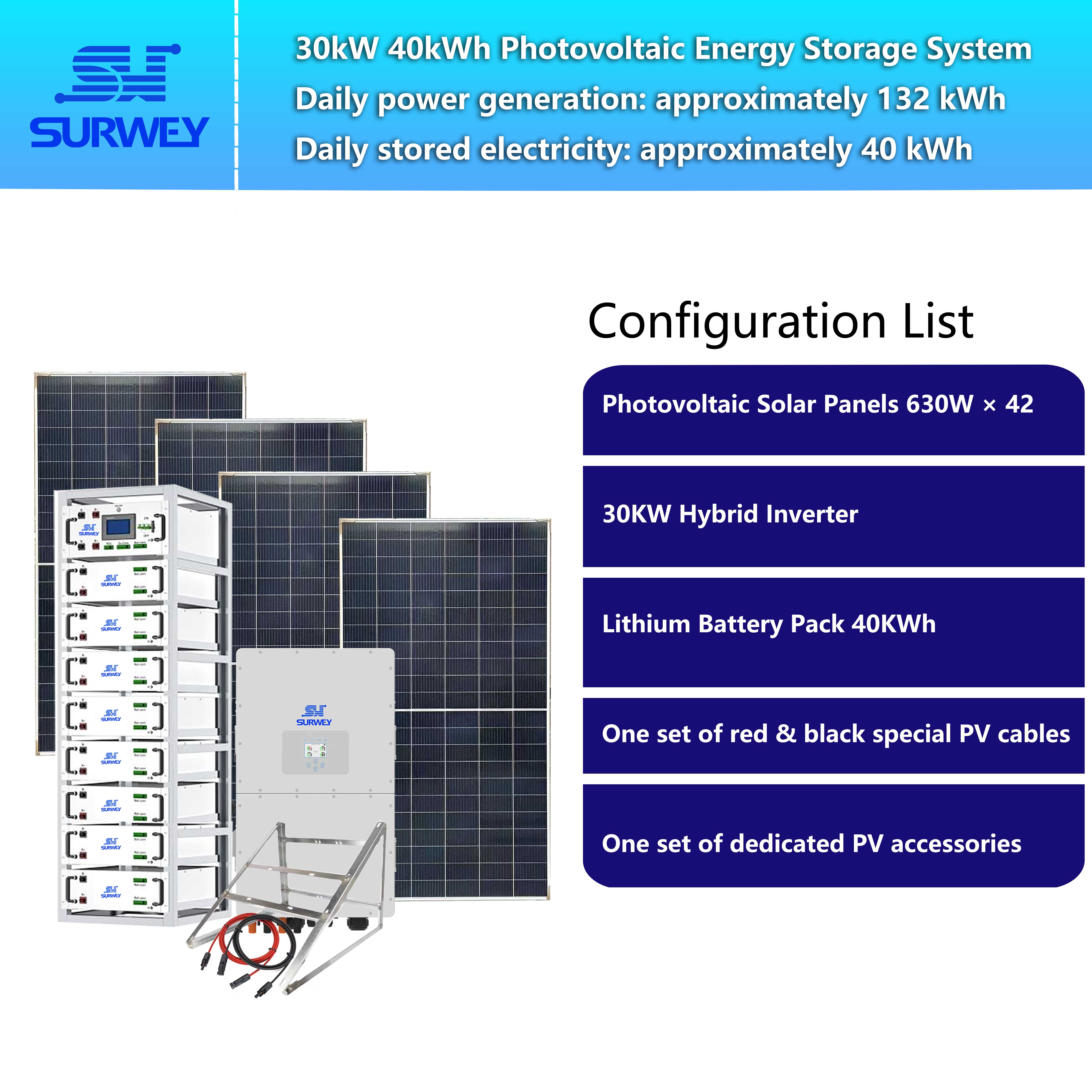
The project is designed with a daily power generation of 132kWh and daily surplus stored energy of 40kWh, covering basic daytime power consumption of the factory and emergency power demand during outages. The rated maximum output power of the system is 30kW. It can provide differentiated emergency power supply duration under various production load conditions to guarantee regular factory production and emergency backup power.
2. Introduction to Main Equipment Parameters
630W N-type Monocrystalline Silicon PV Module
This project uses high-power 630W N-type monocrystalline silicon PV modules with a conversion efficiency of 23.3%. Compared with conventional P-type modules, they deliver superior low-light power generation performance and lower power attenuation under high temperatures, suitable for the year-round high-temperature and strong sunlight outdoor environment in Ibadan, Nigeria. The module adopts a 2.0+2.0mm double-glass structure with anodized aluminum alloy frame and IP68 junction box. It has strong mechanical load resistance, wind and hail resistance, meeting long-term open-air installation requirements in Africa.
Single module parameters: open-circuit voltage 49.34V, operating voltage 41.82V, operating current 15.07A. PV string parameters: open-circuit voltage = 49.34V × 14 = 690.76V; operating voltage = 41.82V × 14 = 585.48V; string current 15.07A. The string voltage falls within the inverter MPPT operating range of 150~850V, achieving perfect matching of electrical parameters.
The full PV array contains 42 modules with total installed capacity of 26.46kW. Three strings (14 modules per string) are separately connected to 3 MPPT ports of the inverter to maximize solar energy harvesting. During daytime, power generated supplies the workshop for self-consumption, and excess energy is stored in the energy storage battery.
30kW Three-phase Hybrid Inverter/Controller
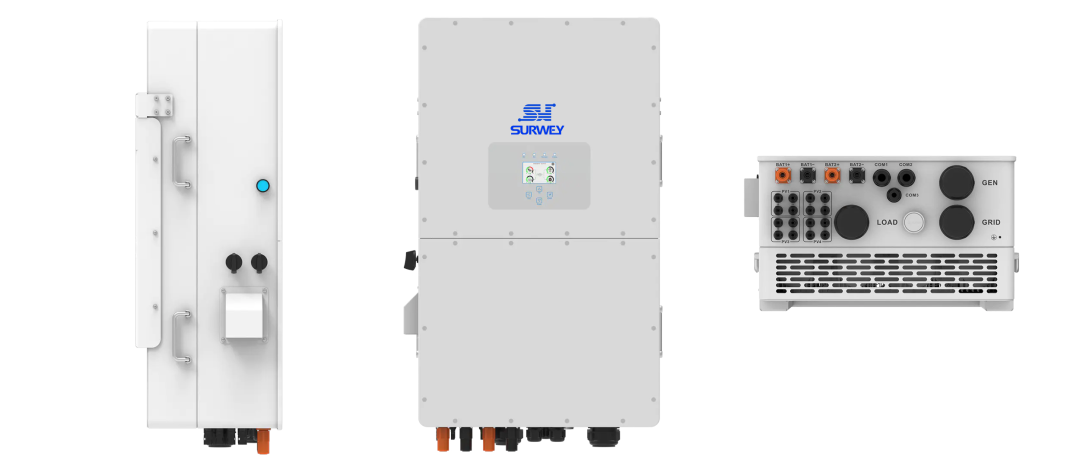
The 30kW three-phase hybrid inverter/controller integrates MPPT PV controller, bidirectional converter and EMS energy management unit. It supports automatic coordinated switching among multiple power sources including utility grid, PV, energy storage and diesel generator. Rated AC output power: 30kW; MPPT voltage operating range: 150~850V. Built-in protection functions include DC reverse polarity protection, over-temperature protection, AC overvoltage and overcurrent protection, islanding protection and residual current detection.
It has abundant communication interfaces and supports remote monitoring of operating status. The equipment realizes intelligent scheduling of multiple power sources: when the grid is normal, utility power supplies the load preferentially; PV power is first delivered to workshop loads for self-consumption, and surplus power charges the energy storage battery. At the moment of grid failure, the system switches to off-grid mode within milliseconds and supplies loads via batteries. When the battery SOC drops to the preset lower limit, the system sends a signal to activate the diesel generator to take over continuous power supply. This equipment can withstand severe voltage fluctuations of African power grids and fits the unstable grid conditions of small and medium factories in Nigeria.
40kWh Rack-mounted High-voltage Lithium Iron Phosphate Energy Storage Battery
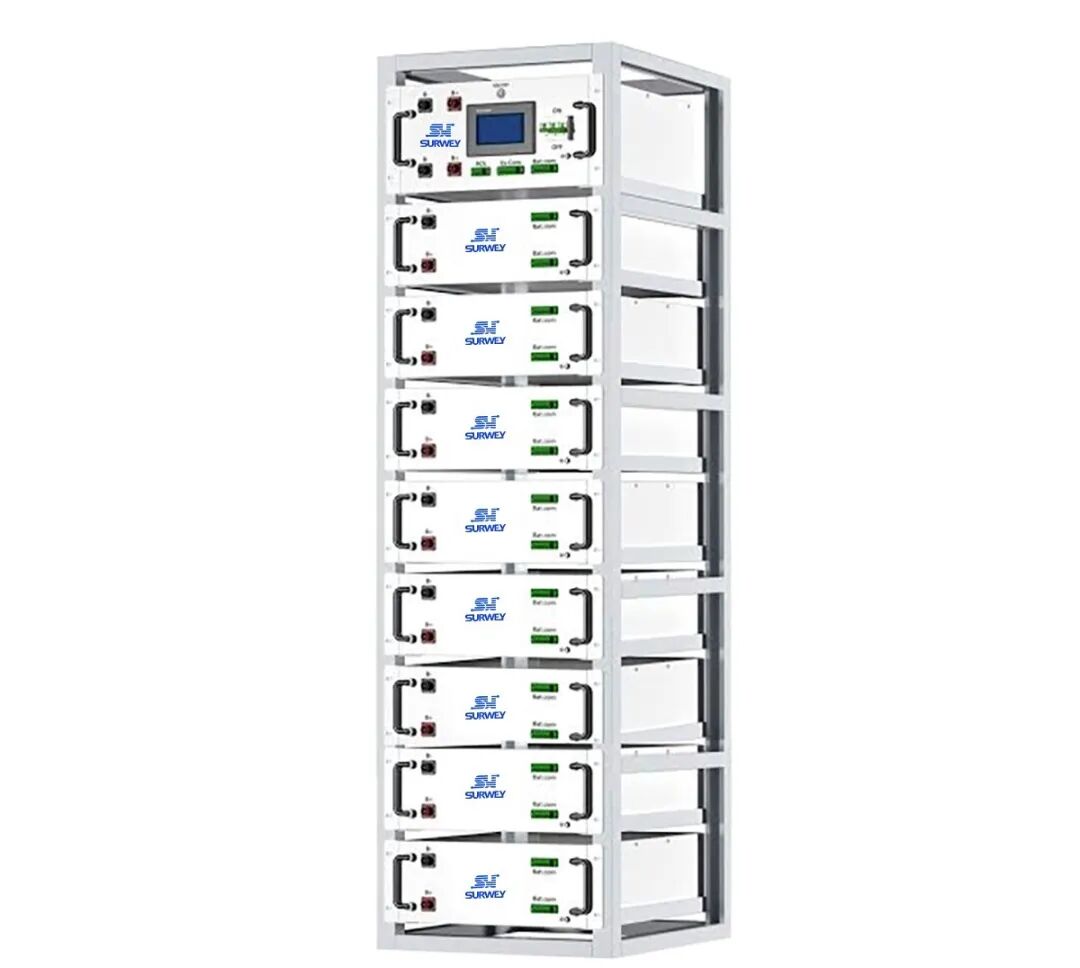
The 40kWh high-voltage lithium iron phosphate energy storage battery is composed of 8 units of 5kWh high-voltage lithium batteries, adopting rack floor-mounted installation. It uses LiFePO4 cells with cycle life ≥8000 times for the selected version, featuring strong high-temperature stability and excellent safety performance. Rated system voltage: 409.6V; operating voltage range: 332.8~467.2V; maximum charge/discharge current: 100A; peak discharge current: 125A (sustainable for 2 minutes).
Built-in BMS battery management system monitors cell voltage and temperature in real time, with complete protections against overcharge, overdischarge, overcurrent and high temperature. It supports CAN/RS485 communication protocols for real-time data interaction with inverter EMS. The enclosure is IP20 rated with operating temperature range of -20℃~55℃, well adapting to the high-temperature environment of Ibadan.
The main function of the energy storage battery is to store surplus PV energy generated during daytime, and supply power for core sewing loads of the factory during sudden grid outages to avoid production suspension losses.
3. System Operating Principle
This PV-ESS system is a grid-tied backup hybrid power supply system. The inverter EMS energy management system automatically judges operating conditions and seamlessly switches among four working modes without manual intervention:
Video: Schematic Diagram of System Working Principle
Grid Normal Period
Factory loads are preferentially powered by the utility grid. PV modules capture solar energy for power generation, which supplies workshop loads first for self-consumption. When PV output exceeds real-time factory power demand, excess electricity charges the 40kWh energy storage battery until the battery reaches the preset upper SOC limit and charging stops. The project is designed to store 40kWh electricity in the battery per day.
Grid Outage (Off-grid Mode)
Once grid failure is detected, the system automatically switches to off-grid state within milliseconds. The energy storage battery converts DC to AC power via the 30kW inverter to drive core production equipment of the garment factory and maintain operation of sewing machines, lighting and other critical loads in the workshop. When battery SOC falls to the preset lower limit, the system sends a trigger signal to start the diesel generator for power supply takeover.
Low PV Output Period (Early Morning, Evening, Rainy Days)
When PV generation is insufficient, load consumption is supplemented by utility grid or energy storage battery to guarantee uninterrupted power supply.
Battery Protection Sleep Mode
When SOC hits the protection lower threshold, the system cuts off non-critical loads and retains only small loads such as monitoring, preventing deep over-discharge that damages cells and extending battery service life.
4. Available Load Power & Emergency Power Supply Duration Table
Battery discharge depth set at 80%, available capacity = 32kWh
表格
| Load Power | Continuous Emergency Power Duration | Application Scenario Description for Workshop Loads |
|---|---|---|
| 8kW | 4h | Retain workshop lighting, fans, monitoring and a small number of sewing machines for minimum production maintenance |
| 16kW | 2h | Regular workshop production loads: multiple sewing machines + cutting machine + lighting & ventilation (typical working condition of this project) |
| 24kW | 1.3h | Full-load workshop production with all sewing equipment switched on simultaneously |
| 30kW | 1.0h | Maximum rated system output, extreme full-load condition of all factory equipment |
5. Solution Conclusion
This 30kW PV-ESS hybrid power supply system is custom-designed for the power consumption characteristics of the garment processing factory in Ibadan, Nigeria and local grid conditions. The series-parallel configuration of PV modules has undergone rigorous electrical check, and the string voltage and current fully match the MPPT operating range of the inverter. The system achieves daily power generation of 132kWh and daily energy storage of 40kWh. It can effectively offset production losses caused by frequent grid blackouts in the local area, greatly reduce the operating hours of diesel generators, and cut fuel consumption and equipment maintenance costs.
The complete set of equipment is equipped with multi-stage electrical protection. The energy storage battery features long cycle life and high temperature resistance, suitable for the tropical climate in West Africa. The system is easy to operate and supports remote operating status monitoring with low later maintenance workload. Prioritizing power continuity for core sewing equipment of the garment factory while balancing project economy and power supply reliability, this scheme serves as a mature power supply solution for small and medium light industrial factories coping with unstable power grids in Nigeria.


